The building
The mill
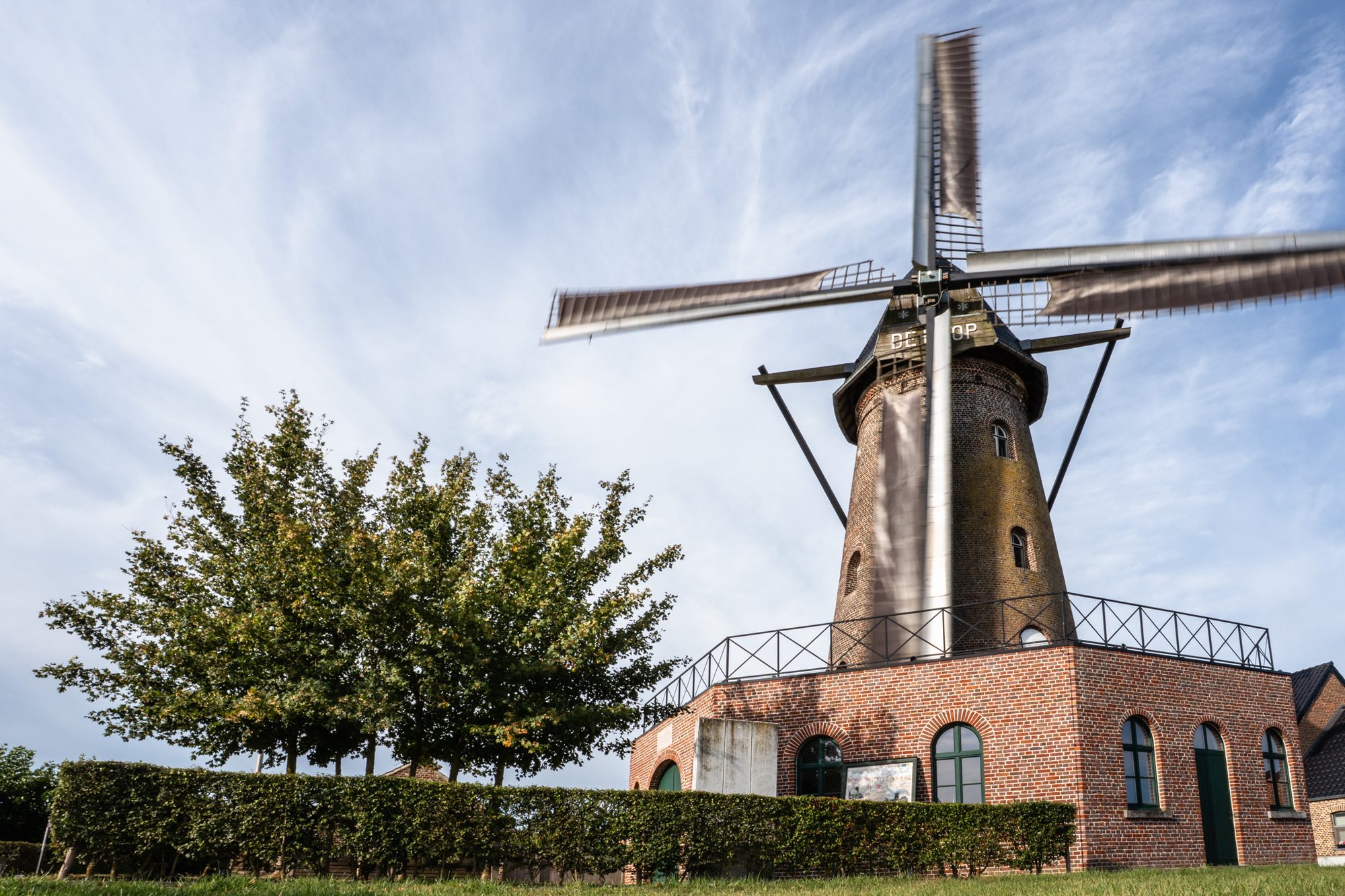
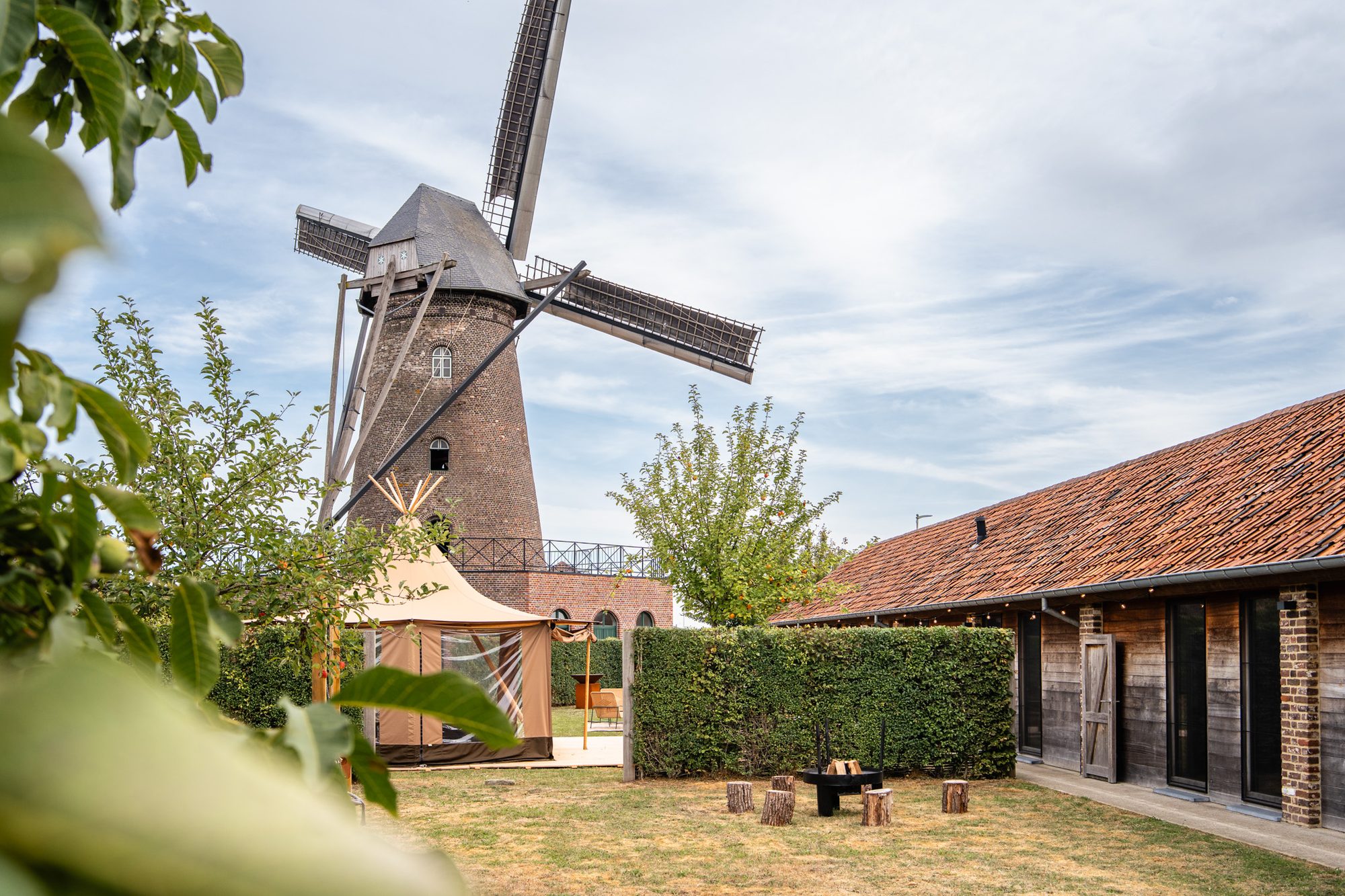
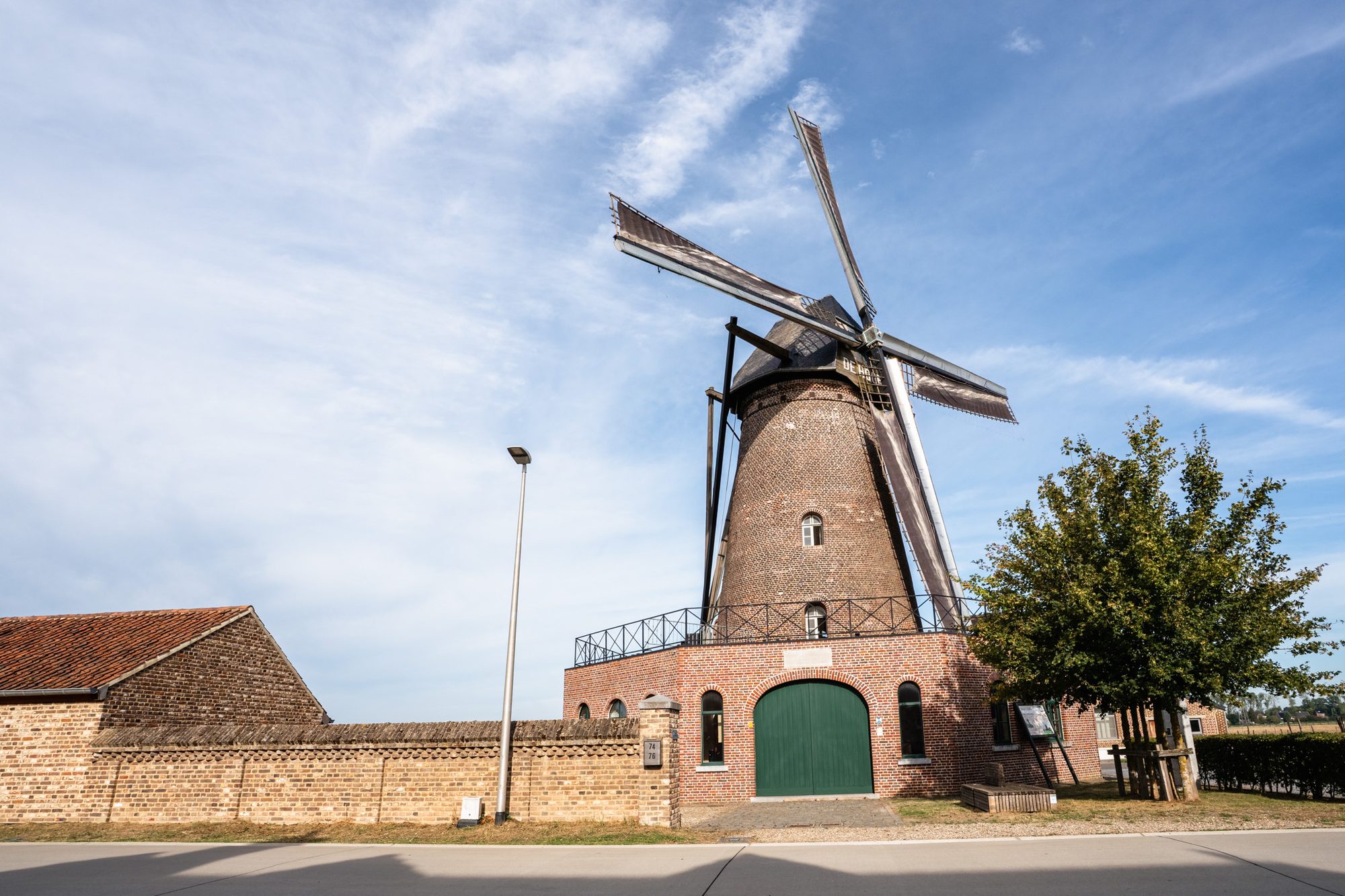
A tower mill with an octagonal gallery that is unique in Flanders. The mill still grinds; the accommodation was built into the barn and the mill base, not into the tower.
In short
- Built
- 1870
- Named
- 1929, by Mathieu van Bussel
- Stopped
- 1968
- Protected monument
- Since 1978
- Restored to working order
- 2009
- The stay
- Barn and half of the mill base, single level
- Interior
- Grietje Schreuder-van Boekel
Built in 1870, named after a hope
The mill was built in 1870 by Theodoor Smeets and Sofia Beunen, who saw a future for their son as a miller. He did not share that view, so the mill was sold.
In 1929 it came into the hands of Mathieu van Bussel, from a well-known milling family in Nederweert. He had pinned all his hope on the venture and named the mill "De Hoop" — the hope.
Stopped, protected, milling again
After several owners the mill was shut down in 1968: it could no longer compete with electric grain mills. In 1978 it was listed as a protected monument.
From 2001 the volunteers of the Windmolen De Hoop association took over. With hundreds of supporters and sponsors the mill was restored to working order; by 2009 that work was complete.
Its octagonal gallery, which served as storage, is unique in Flanders. Half of that same base is now the accommodation.
The mill stays a mill
Unlike many mills converted into homes, you do not sleep inside the tower here. The mill remains in use: the sails, the shaft, the cap and the milling gear keep their function.
For guests that means something rare: you stay against a working piece of nineteenth-century engineering, with the gallery above your head and the sound of the sails alongside.
The mill still grinds
De Hoop is not a silent monument. Windmaalbedrijf De Hoop still grinds grain here on the millstones — local grain, not imported — and by doing so keeps the mill standing.
To see the mill at work or buy flour milled here, that goes through the wind-milling business.
Visit Windmaalbedrijf De Hoop →The conversion: barn and base
The accommodation was made in the barn next to the mill and in half of the round base at its foot. That choice keeps the monument intact while offering something a mill normally never can: generous rooms all on one level.
The accommodation is entirely on one level: all bedrooms, bathrooms and living spaces are on the ground floor, with no stairs.
The interior
The interior was designed by Grietje Schreuder-van Boekel, who does the interiors for Specialstays. She left the old brickwork and mill timber in view and set calm colours and bespoke furniture against it.
Above the outdoor table hangs a lamp by Lieske Schreuder, known from B&B Vol Liefde. Not a shop lamp but an artwork: once it gets dark it lays a warm ring of light over the table.
The mill in pictures
23 photos — drag to browse
Rented and managed by Specialstays
The calendar is open; book directly through Specialstays.
FAQ
Frequently asked questions
Do you sleep inside the mill itself?+
No. The mill stays in use as a mill. The accommodation was made in the barn and in half of the round base at the foot of the mill, entirely on the ground floor.
Is it really a working mill?+
Yes. The 1870 mill has been a protected monument since 1978 and was restored to working order by volunteers.
What makes this mill special?+
The octagonal gallery that served as storage is unique in Flanders. Part of that same base is now the accommodation.